A useful house painting estimate in Woodstock should list the surfaces and prep work. It should also cover repairs, primer, paint, protection, and cleanup. The total matters, but the scope behind that total matters more. Two quotes can look similar while allowing very different levels of prep and repair.
This guide explains how to read the estimate itself. For broader pricing benchmarks, use our interior painting cost guide or exterior house painting cost guide.
What Should a Woodstock Painting Estimate Include?
Every estimate should define the surfaces, preparation, products, coat plan, protection, cleanup, schedule, and exclusions. A single line that says “paint house” leaves too much open to interpretation.
Connecticut's Department of Consumer Protection says a home improvement contract should identify the work and price. It should name the material quality or brand and explain cleanup, permits, and payments. The contract must also include the contractor's HIC registration number and required dates (Connecticut DCP, What to Include in a Home Improvement Contract).
Before comparing totals, confirm that each written estimate answers these questions:
- Which walls, ceilings, trim, doors, siding, shutters, porches, or outbuildings are included?
- What cleaning, scraping, sanding, patching, caulking, and carpentry are included?
- Where will primer be used, and is it spot primer or a full coat?
- Which paint line, finish, and sheen are specified?
- How many finish coats are included, and what conditions could change that plan?
- Who moves furniture, removes hardware, protects landscaping, and handles cleanup?
- Which repairs, color changes, or hidden conditions require a written change order?
Which Factors Change the Price Most?
Preparation and access often create the biggest differences between estimates. Square footage helps show the size of the job. It cannot show peeling clapboards, failed caulk, cracked plaster, high gables, Gothic trim, or soft wood around a window.
| Estimate factor | Why it changes the scope | What the estimator should document |
|---|---|---|
| Surface condition | Peeling paint, stains, cracks, and failed joints require added prep | Areas to scrape, sand, patch, caulk, seal, or prime |
| Home height and access | Steep grades, high peaks, and limited setup space slow safe access | Included elevations and access assumptions |
| Substrate | Wood, plaster, masonry, metal, and laminate need different systems | Primer and finish matched to each surface |
| Color change | Large shifts may require added coverage or a tinted primer | Selected colors, samples, primer, and coat plan |
| Detail level | Trim, divided-light windows, built-ins, and decorative brackets add handwork | Exact trim and detail surfaces included |
| Repairs | Rot, loose boards, water damage, and plaster failure are not paint-only tasks | Repair allowance, unit price, or clear exclusion |
Paint quantity is only one part of the price. Sherwin-Williams says a gallon generally covers about 250-400 square feet. Its exterior guide also calls for cleaning, drying, loose-paint removal, and suitable weather (Sherwin-Williams, How to Paint a House Exterior). A coverage calculation cannot replace a site inspection.
How Do Woodstock Homes Affect an Exterior Estimate?
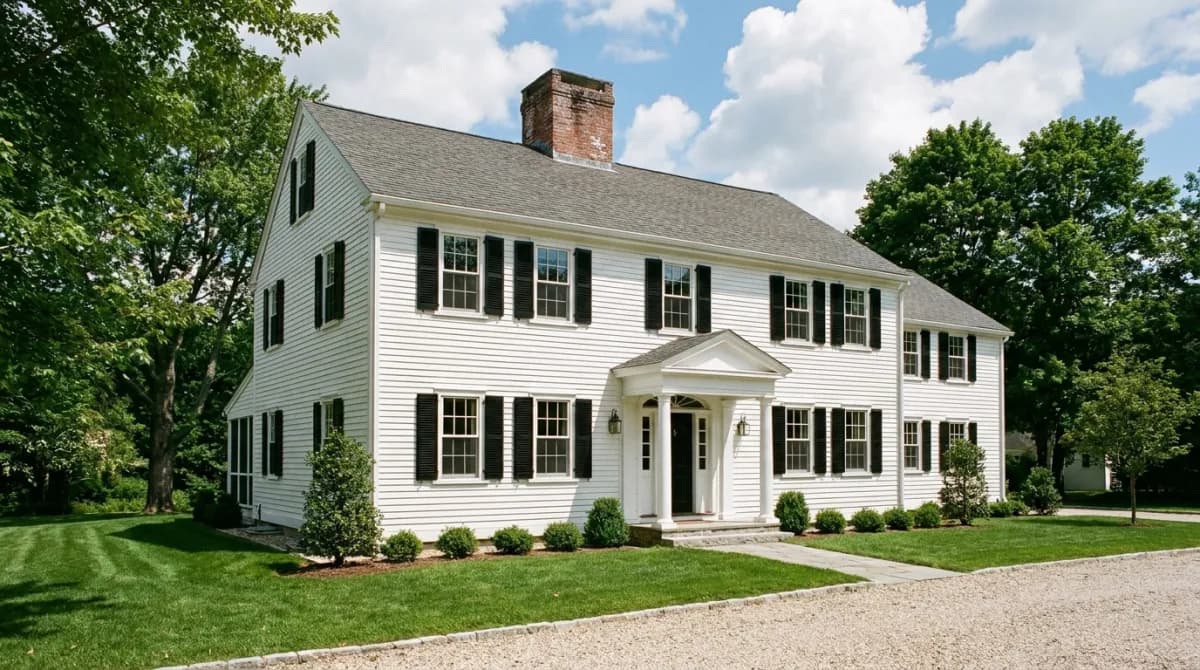
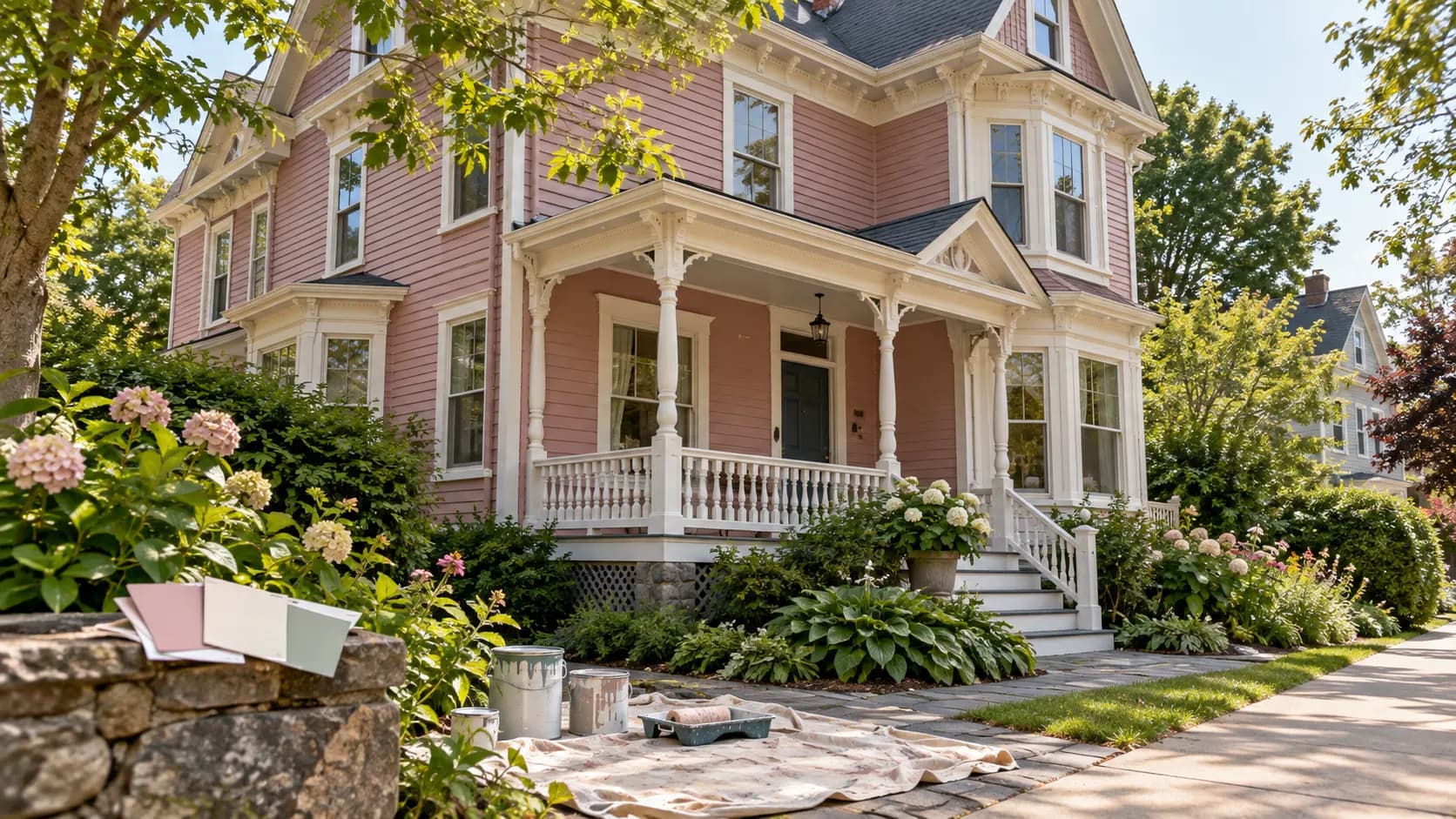
Woodstock's housing mix can make exterior scopes unusually detail-sensitive. Colonial farmhouses, Capes, Victorian-era homes, barns, additions, and newer construction do not require the same access or preparation. A simple rectangular facade is different from multiple gables, porches, brackets, and older clapboard.
Rural exposure also matters. Open fields and tree cover can produce different moisture and drying conditions on opposite sides of the same home. The estimate should identify mildew, bare wood, failed joints, and drainage or vegetation issues that must be corrected before coating. It should not promise that paint will solve an active moisture source.
For a local overview of older architecture and prep decisions, see our guide to painting historic homes in Woodstock and Pomfret. Homeowners comparing local service options can also review the Woodstock painting service page.
When Does Lead-Safe Work Belong in the Estimate?
Lead-safe planning belongs in the scope when paid work will disturb paint in covered pre-1978 housing. An allowed test or finding may show that the parts are lead-free. Otherwise, the issue is the dust made during prep, not the new paint color.
The EPA says contractors must be lead-safe certified when the rule applies to work in pre-1978 homes. They must also follow lead-safe work practices (EPA, Lead-Safe Renovations for DIYers). The estimate should explain testing or assumptions. It should also cover containment, dust control, cleanup, and the affected surfaces.
Do not accept a vague “lead fee” with no scope. Ask which components may be disturbed, how the work area will be contained, and what documentation you will receive. Lead-safe work can change labor and protection requirements, so it should be addressed before work begins.
How Should You Compare Two Painting Estimates?
Normalize the scope before comparing the price. Put the estimates side by side and mark what each contractor includes, excludes, or leaves unclear.
Start with five categories:
- Preparation: Are cleaning, scraping, sanding, patching, caulking, and priming described?
- Coverage: Are the exact rooms, elevations, trim items, and doors listed?
- Materials: Does the proposal name the manufacturer, product line, finish, and sheen?
- Protection and cleanup: Does it explain how floors, furniture, landscaping, and adjacent surfaces will be protected?
- Contract terms: Are the price, payment milestones, dates, change-order process, and cancellation notice clear?
If one estimate is much lower, ask what is missing before assuming it is more efficient. If one is much higher, ask which repairs, protection, or coating steps account for the difference. The goal is not identical pricing. It is a clear explanation of value and risk.
What Should Happen During the Walkthrough?
A thorough walkthrough should turn visible conditions into a written scope. The estimator should ask what you want painted, inspect each included area, discuss color and finish changes, identify repairs, and explain what cannot be confirmed until work starts.
For interiors, point out water stains, recurring cracks, loose plaster, wallpaper, glossy surfaces, damaged trim, and rooms that must stay usable. For exteriors, walk every accessible side and review peeling, bare wood, rot, failed caulk, vegetation, roofline access, decks, shutters, and attached structures.
Take your own notes and request revisions when the written estimate does not match the conversation. Verbal assurances are hard to compare later. A revised scope is more useful than a lower total built on assumptions.
Frequently Asked Questions
Is a painting estimate the same as a contract?
Not always. An estimate may describe anticipated scope and price, while the signed contract governs the project. In Connecticut, home improvement contracts must meet state requirements. Confirm that the final agreement includes the complete scope, price, materials, dates, payment schedule, registration number, and cancellation notice.
Can a painter estimate a Woodstock house by square footage alone?
Square footage can support early planning, but it cannot capture condition, access, trim complexity, repairs, substrate, or lead-safe requirements. A firm written estimate should follow an in-person walkthrough unless the scope is unusually simple and every assumption is documented.
Why are two exterior painting estimates so different?
The contractors may be pricing different preparation, repairs, products, coat counts, access methods, or protection. Compare the scopes line by line. Ask each contractor to clarify exclusions and allowances in writing before you compare the totals.
Should carpentry repairs be included in a painting quote?
Known repairs should be listed as included work, a separate line item, a unit price, or a clear exclusion. Hidden damage may require a written change order after the surface is opened. Paint should not be applied over unsound or actively wet material.
How can I request a clearer estimate?
Provide the same project description to each contractor, identify every surface you want included, discuss repairs and color changes, and ask for product and coat details in writing. Woodstock homeowners can request a free written estimate or call (860) 926-3009.
Use the Scope to Make the Decision
The best estimate is not automatically the lowest or the longest. It is the one that lets you understand the work, compare alternatives, and see how uncertain conditions will be handled. In Woodstock, that means connecting local architecture and surface condition to a specific preparation and coating plan.
Review the surfaces, prep, repairs, products, coats, protection, cleanup, schedule, and exclusions before signing. When each item is written down, the price becomes easier to judge and the project becomes easier to manage.