# How to Prepare for Interior Painting: 2026 Checklist
Before interior painters arrive, remove fragile and personal items, clear access to the walls, identify repairs or moisture stains, and agree in writing on who moves furniture and protects each surface. The painter should confirm the products, colors, rooms, preparation, and daily access plan before work starts.
This guide separates homeowner tasks from contractor tasks so you do not assume that furniture moving, hardware removal, repairs, or cleanup are included. If you are still comparing scopes, start with our interior painting service and request a written estimate for your rooms.
What Should You Do Before Interior Painters Arrive?
Complete these items before the agreed arrival time:
- Confirm the rooms, ceilings, trim, doors, closets, and accent walls included in the estimate.
- Confirm the paint colors, sheen, product line, primer needs, and who purchases each product.
- Remove pictures, mirrors, window treatments, electronics, collectibles, medication, and other small or fragile items.
- Clear safe paths from the entrance to each work area and identify the bathroom or utility sink the crew may use.
- Move valuables, important documents, and personal items completely out of the work zone.
- Tell the painter about pets, children, allergies, occupied rooms, alarm systems, and access restrictions.
- Photograph existing damage and point out cracks, loose paint, water stains, soft drywall, failed caulk, or other concerns during the walkthrough.
One Week Before Painting: Confirm Scope and Access
Review the Written Estimate
The estimate should identify the exact surfaces and preparation included. Ask whether it covers washing, patching, sanding, caulking, spot priming, full priming, floor protection, furniture protection, cleanup, and a final walkthrough. If two estimates include different preparation, the totals are not directly comparable.
Ask what happens if the crew finds moisture damage, loose plaster, failed drywall, or another condition that was not visible during the estimate. Repairs outside the original scope should be documented before extra work proceeds.
Finalize Color and Sheen
Approve samples in the rooms where the colors will be used. Daylight, lamps, flooring, cabinets, and nearby finishes can change how a color appears. Record the manufacturer, color name, color number, product line, and sheen instead of relying on the color name alone.
Plan the Work Sequence
Decide which rooms must remain usable. Kitchens, bedrooms, bathrooms, hallways, and home offices may need a staged schedule. Confirm where tools and materials may be stored and which doors must remain accessible.
Two or Three Days Before Painting: Clear and Inspect
Remove Small Items and Fragile Belongings
- Take down wall art, mirrors, clocks, removable hooks, curtains, and blinds if those tasks are assigned to you.
- Clear shelves, counters, mantels, desks, and the tops of dressers.
- Unplug and remove small electronics from the room.
- Move breakable lamps and decor beyond the traffic path.
- Empty closets only when the closet interior is part of the scope.
Move Furniture According to the Agreement
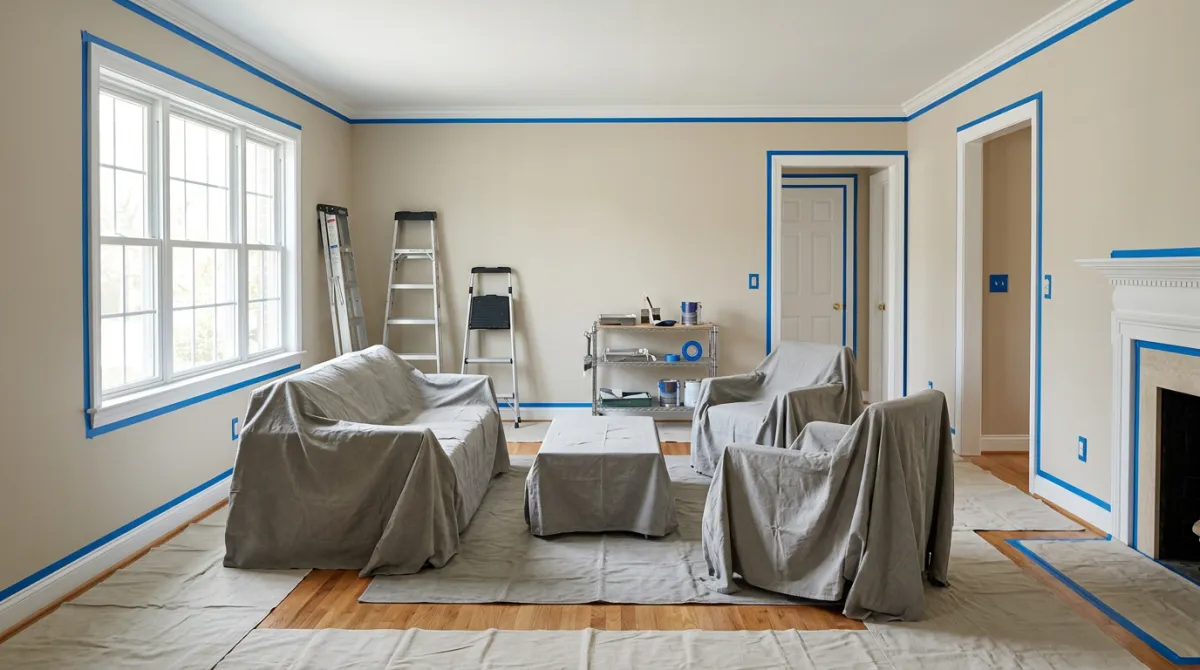
Small furniture is usually easiest to remove from the room. Large pieces may be moved toward the center only if the written plan allows enough working clearance. Do not drag heavy furniture across finished floors or assume the painter will disassemble it.
Inspect Walls and Ceilings
Mark holes, cracks, peeling paint, stains, and damaged caulk with removable notes. A water stain should be investigated before it is coated; paint does not fix an active leak. Sherwin-Williams' surface-preparation guidance says a paint-ready surface should be clean, sound, and dry, with loose coating and defects addressed before the finish coat (Sherwin-Williams, surface preparation).
The Day Before Painting: Protect the Schedule
- Confirm the arrival window, parking, entry method, and contact person.
- Keep hallways, stairs, and doorways clear.
- Secure pets away from open doors, tools, drop cloths, and wet coatings.
- Arrange a safe activity area for children outside the work zone.
- Remove food, dishes, and countertop appliances when a kitchen is included.
- Confirm whether the painter or homeowner removes switch plates, vent covers, and hardware.
- Share any ventilation limitations before work starts.
Painting-Day Checklist
- Keep the agreed entrance and work areas unlocked or provide the access method.
- Keep pets and children outside the work zone.
- Verify the approved color and sheen before broad application.
- Keep the decision-maker reachable for questions about repairs or scope changes.
- Avoid entering protected areas or moving drop cloths, masking, tools, or wet materials.
- Review progress and any change order with the crew contact, not by altering the work yourself.
Room-by-Room Interior Painting Preparation
Bedrooms
Remove bedding, valuables, chargers, lamps, and items beneath the bed. Confirm whether closets, baseboards, and doors are included. Plan where occupants will sleep if the room cannot be used that evening.
Living Rooms and Home Offices
Disconnect televisions, computers, speakers, and network equipment before moving them. Photograph cable connections if needed. Clear bookshelves near painted walls and protect any equipment that must stay in the room.
Kitchens
Clear counters, open shelves, wall decor, and small appliances. Ask how appliances, backsplashes, cabinets, and food-preparation areas will be protected. Cabinet refinishing is a different coating system from ordinary wall painting; compare the dedicated cabinet refinishing process if cabinets are part of the project.
Bathrooms
Remove toiletries, towels, medicines, rugs, and countertop items. Identify active leaks or recurring condensation before painting. Confirm whether exhaust-fan covers, mirrors, towel bars, and caulk are in the scope.
Who Handles Wall Repairs and Surface Preparation?
The written estimate controls. Homeowners should not patch, sand, or caulk immediately before the job unless the painter has agreed to that plan. Fresh repairs may need specific drying, sanding, dust removal, or primer, and an incompatible patch can create visible flashing.
For older homes, lead-safe planning matters before anyone disturbs existing paint. The EPA recommends checking the age of the home and using lead-safe practices for renovation, repair, and painting work in covered pre-1978 housing (EPA lead-safe RRP steps). Do not dry-sand or scrape suspect coatings without the required controls.
What Should You Check After Interior Painting?
Use the final walkthrough to compare the completed work with the written scope:
- Confirm that the agreed walls, ceilings, trim, doors, and closets were completed.
- View repaired areas and edges under normal room lighting.
- Check that covers, hardware, fixtures, and moved items assigned to the painter were reinstalled.
- Confirm that masking, debris, and job materials were removed as agreed.
- Record the paint manufacturer, product, color, sheen, and remaining labeled touch-up paint.
- Ask when furniture may return, when walls may be cleaned, and when the coating is fully cured according to the product label.
Interior Painting Preparation FAQs
Do I need to move all furniture before painters arrive?
Not always. Remove small and fragile items, then follow the written agreement for large furniture. The room still needs enough clearance for safe preparation, ladder placement, protection, and painting.
Should I clean walls before professional painters arrive?
Ask first. Dust, grease, smoke residue, and other contamination can affect adhesion, but cleaning and preparation may already be included. The crew should define the method and confirm the surface is dry before coating.
Should I fill nail holes myself?
Only if the painter agrees. The estimate should state which holes and cracks will be repaired, what material will be used, and whether sanding and primer are included.
Can I stay home during interior painting?
That depends on the rooms, ventilation plan, products, occupants, and work sequence. Ask which areas must remain closed and make a separate plan for children, pets, and anyone sensitive to dust or odor.
How should I prepare an older home for painting?
Tell the estimator the home's age and do not disturb suspect paint before lead-safe requirements are reviewed. For covered pre-1978 housing, the contractor should explain the applicable EPA RRP work practices.
Request a Written Interior Painting Estimate
An estimate for interior painting should define the surfaces, preparation, protection, coatings, coat plan, cleanup, schedule, and responsibilities on both sides. Review our interior painting scope or request an on-site estimate for your home.