Kitchen Cabinet Refinishing in Thompson & Brooklyn, CT
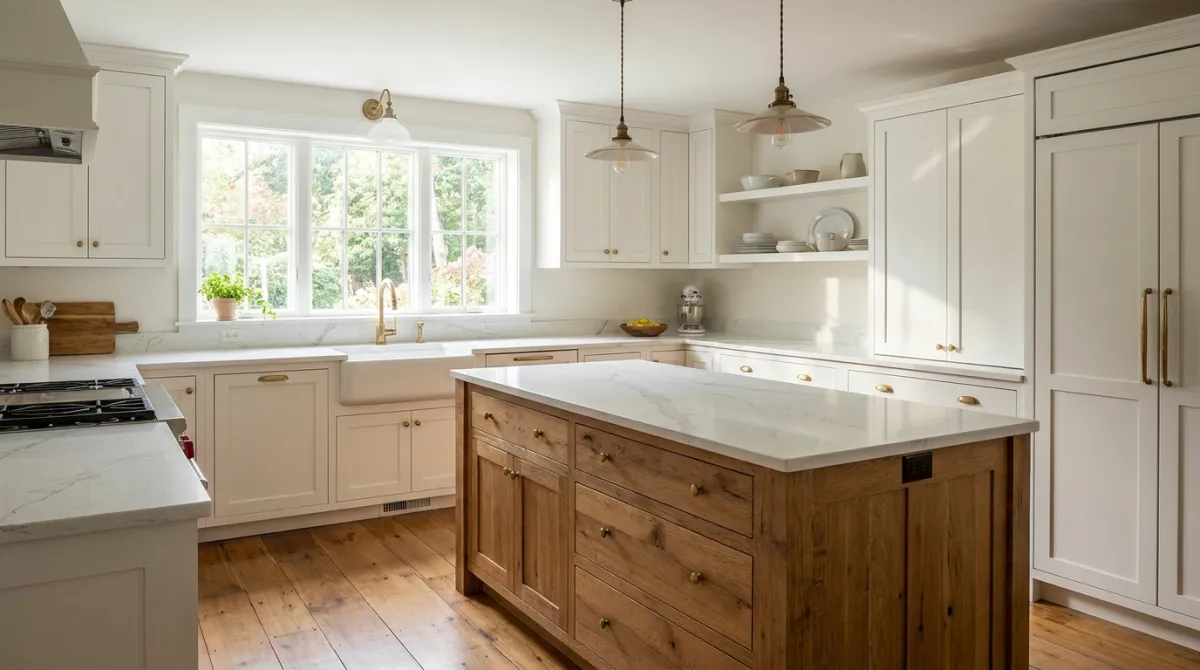
Cabinet refinishing updates the visible finish on existing doors, drawer fronts and cabinet boxes without replacing the kitchen layout. It can be a practical option for Thompson and Brooklyn homeowners whose cabinets are structurally sound but have worn clear coat, dated color or a finish that no longer suits the room.
This guide explains the process, published price guidance, timing and the conditions that may make replacement a better choice. A site visit is still necessary because door count, substrate, damage, finish selection and preparation determine the written scope.
Key Takeaways
- Sound wood cabinets are usually stronger refinishing candidates than peeling thermofoil, swollen particleboard or damaged boxes.
- A typical scope includes cleaning, sanding or deglossing, bonding primer, cabinet-grade finish and reinstallation.
- Our published Connecticut guidance is $2,500-$6,500 for an average kitchen; door count, condition and finish system can move the price.
- The service page lists a typical working time of 3-5 days, but coating cure instructions and the approved project scope control when normal use resumes.
Why refinish instead of replacing cabinets?
Refinishing keeps the existing cabinet boxes and layout, so it avoids the demolition and installation involved in a full replacement. It is best suited to a kitchen where the layout works and the boxes, doors and drawer fronts are stable enough to prepare and coat.
Replacement may be the better route when the layout needs to change, cabinet boxes are water-damaged, particleboard is swollen, or doors are too warped to close correctly. Cosmetic wear, an outdated color or a sound finish that needs renewal are the conditions cabinet refinishing is designed to address.
What does the cabinet refinishing process involve?
A cabinet refinishing scope should identify the surfaces being coated, how they will be cleaned and prepared, the primer and finish system, where doors and drawer fronts will be sprayed, and how the pieces will be protected while they cure.
Degrease and clean
Kitchen surfaces can hold grease, cleaner residue and hand oils, especially near the stove and frequently used pulls. Doors, drawer fronts and face frames need to be cleaned before abrasion or primer so contaminants are not driven into the surface.
Sand to a sound substrate
The preparation method depends on the existing coating and substrate. A sound finish may need cleaning and controlled abrasion; a failing finish may require more removal. Dust must be collected before primer. The estimate should also identify damaged doors, open joints and hardware work separately from coating preparation.
Prime and spray the finish
Primer and finish must be compatible with the cabinet material and the existing coating. Spraying removable pieces can create a more even surface than ordinary wall-paint methods. Dry-to-touch time is not the same as full cure, so the written plan should include the product-specific recoat and gentle-use instructions.
How long does cabinet refinishing take?
Our cabinet refinishing service page lists 3-5 days as typical guidance. A small kitchen with sound surfaces and one color can differ from a larger kitchen that needs repairs, grain filling, a color change or additional coats.
Doors and drawer fronts are commonly removed for controlled finishing while cabinet boxes and face frames remain in place. Ask the estimator when the sink, refrigerator, cooktop and storage areas will be usable, and when hardware and doors will be reinstalled. Full cure can extend beyond the working schedule, so follow the specified coating instructions after completion.
How much does cabinet refinishing cost?
Our published Connecticut guidance is $2,500-$6,500 for an average kitchen. The service page breaks that into $2,500-$4,000 for a small kitchen, $4,000-$6,500 for a medium kitchen and $6,500-$10,000 for a large kitchen. These are planning ranges, not quotes.
The main price factors are door and drawer count, cabinet condition, cleaning and repair needs, finish selection, grain filling, interior cabinet painting and hardware changes. A written estimate should list which surfaces and steps are included so proposals can be compared on the same scope.
For a local service page, see cabinet refinishing in Brooklyn or cabinet refinishing in Thompson.
Which cabinets are good and bad candidates?
The first inspection question is what the cabinets are made from and whether the substrate is stable. Wood doors and face frames with sound boxes often provide a workable surface. Laminate, thermofoil and previously coated cabinets need product-specific adhesion checks and preparation.
Good candidates:
Tougher candidates:
- Peeling thermofoil or melamine where the surface is already lifting.
- Particleboard boxes with water damage or crumbling corners.
- Doors so warped they no longer sit flush.
An in-home assessment should identify the substrate, damaged pieces, adhesion risks and any repairs before the coating system is selected.
What color and finish should you choose?
Color should be tested against the room's countertops, backsplash, flooring and changing daylight. Sheen also changes how much surface texture, fingerprints and reflected light remain visible. Ask for the exact product, color and sheen in the written estimate, then approve a sample before the full run begins.
If you're refreshing the whole room, refinished cabinets pair naturally with fresh interior painting on the walls and trim for one cohesive look.
What should a written cabinet estimate include?
A useful estimate should make the scope easy to compare. Look for:
- the number of doors, drawer fronts, boxes, panels and trim pieces included;
- cleaning, sanding or deglossing, repairs, primer and finish coats;
- the exact coating product, color and sheen;
- hardware removal, hole filling, hinge adjustment and reinstallation;
- where spraying will occur and how nearby rooms will be protected;
- the working schedule, cure guidance, cleanup and change-order process.
If the kitchen also needs layout changes, counters, flooring or plumbing work, compare refinishing with the broader kitchen remodeling scope before deciding.
Frequently asked questions
Is cabinet refinishing durable enough for a busy kitchen?
Durability depends on surface preparation, primer and finish compatibility, coat application and full cure. Cabinet-grade products are designed for higher-use surfaces than ordinary wall paint. Ask the estimator to name the coating system and provide its cleaning and cure instructions.
Can you refinish cabinets without removing them?
The cabinet boxes usually remain installed, while doors and drawer fronts can be removed for controlled preparation and spraying. The written scope should explain where each part will be finished and how the kitchen and adjacent rooms will be protected.
Will refinishing fix doors that stick or sag?
Refinishing addresses the surface, not structural damage. A loose hinge may be adjustable, but warped doors, swollen boxes or failed substrate may need repair or replacement before coating. Those items should be identified during the estimate.
What's the difference between refinishing and full replacement?
Refinishing keeps the existing cabinet boxes, doors and layout while renewing the visible finish. Replacement removes the cabinets and creates the opportunity for a different layout, new storage and new materials. Refinishing fits sound cabinets that need a cosmetic update; replacement fits damaged cabinets or a kitchen that needs structural change.
Request a cabinet assessment
If your Thompson or Brooklyn kitchen has a workable layout and structurally sound cabinets, refinishing may provide the update you need without full replacement. Request a written estimate to confirm the substrate, repairs, preparation, finish system, schedule and price for your specific kitchen.